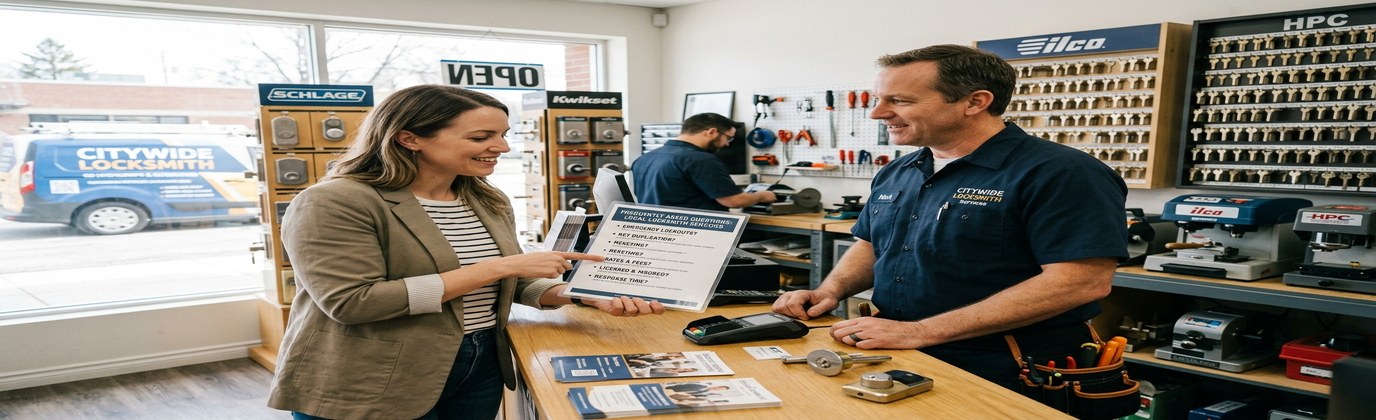
Everything you need to know about finding, vetting, pricing, and safely hiring a local locksmith near you. Updated May 2026.
The most reliable ways to find a genuinely local locksmith: ask neighbors on Nextdoor for personal recommendations, search the ALOA member directory at aloa.org by zip code, check your state's licensing database (BSIS in CA, TDLR in TX), or look for locksmiths with consistent Google and Yelp reviews over 3+ years that mention local landmarks and specific technician names.
For the best results, cross-reference Google reviews with the ALOA member directory and local community recommendations such as Nextdoor.
National call centers generate hundreds of low-quality directory Business Profiles using virtual office addresses and local phone numbers. Google requires video verification for locksmith categories in response to this abuse, but new listings are created as fast as existing ones are removed. This is a widely documented problem covered by the FTC, the National Consumers League, and multiple state attorneys general.
Look for a verifiable local presence: confirm the address on Street View and look for multi-year photo history. Reputable locksmiths are licensed and insured.
Things that may indicate a less established business: address is a UPS Store, mailbox service, or residential address; all reviews are 5-star and were posted in a short window; no photos of an actual shop, van, or technician; the business name uses a generic city keyword (e.g., "Dallas Best Locksmith 24/7"); the listed phone number is different from what they answer on when you call.
Positive signals: multiple years of reviews with owner responses; photos of an actual branded vehicle; reviews mentioning the technician by name; consistent address history across Google, Yelp, and the BBB.
Typical 2026 rates from genuine local locksmiths (US national averages): residential lockout $75-$150; rekeying per lock $65-$130; car lockout $65-$120; car key programming (transponder) $150-$350; smart lock installation $120-$250; deadbolt installation $100-$180.
Service call fees (a separate charge for dispatch) range from $0 to $35 for most local locksmiths. Any locksmith quoting $19-$49 as a full service price is likely to quote additional charges on-site, so always ask for an all-in written estimate before work begins.
A fair quote is specific, written, and includes all components: service call fee, parts cost if any, and labor. Get the quote before the tech starts any work. Compare against the typical ranges above.
If a technician tells you the price over the phone but then significantly increases it once on-site ("the lock is special," "the door has complications"), do not proceed without a signed revision. You have the right to get a second opinion before any work is done.
Yes, many legitimate local locksmiths charge an after-hours or weekend premium, typically an additional $25-$75. This is disclosed upfront and included in the written estimate. A local locksmith charging an after-hours premium of $50 for a total lockout bill of $150-$200 is reasonable and fair.
Always confirm the after-hours rate before the technician arrives, so the final invoice matches what was discussed.
Yes. A skilled locksmith can generate a key from the lock alone using impressioning (creating a physical impression of the internal pins) or key decoding (reading the cut depths directly). For cars, automotive locksmiths can retrieve the key code from the vehicle's VIN number through a dealer code lookup and cut a replacement key without the original.
Making a key from scratch costs more than duplicating an existing one: expect $80-$150 for a house key from the lock, and $150-$300+ for a car key from the VIN depending on the vehicle.
Yes, rekeying on move-in is one of the highest-value security investments you can make. For $150-$400 (depending on how many exterior locks your home has), you eliminate any risk from prior occupants, contractors, real estate agents, or previous neighbors who may have a copy of the old key.
Rekeying replaces only the internal pin tumblers; the hardware and keys stay the same profile but all old keys stop working. It is typically cheaper than full lock replacement and provides equivalent security against unauthorized key access.
First: check if any other entry point is unlocked, and whether anyone else has a spare key. If not, find a locksmith using the verification steps in this guide: confirmed local address, state license, and a specific price range quoted over the phone (not just a "service call fee").
When the technician arrives, confirm who they are and get the written estimate before work begins. A professional local locksmith will open a standard residential door without drilling in most cases. If drilling is suggested, ask for an explanation of why other methods were not suitable first.
Contact the locksmith company directly first and share your specific concern. Most legitimate local businesses respond quickly and want to resolve issues — their local reputation depends on it. Document the original quote and the final invoice for reference.
If you paid by credit card, review your card issuer's dispute options. For licensed locksmiths in regulated states, you can also contact the state licensing board (BSIS in CA, TDLR in TX) if a direct resolution is not possible.
Document the damage with photos before and after. If the locksmith carries general liability insurance (which all legitimate local locksmiths should), file a claim against their policy for the repair or replacement cost. Ask for the insurance carrier and policy number at the time of service.
If needed, your homeowner's or renter's insurance policy may also cover damage caused by a service provider. Small claims court is another option if a direct resolution is not reached.
Send it to our editorial team. We respond within 24 hours and may add your question to this FAQ.
Ask a Question