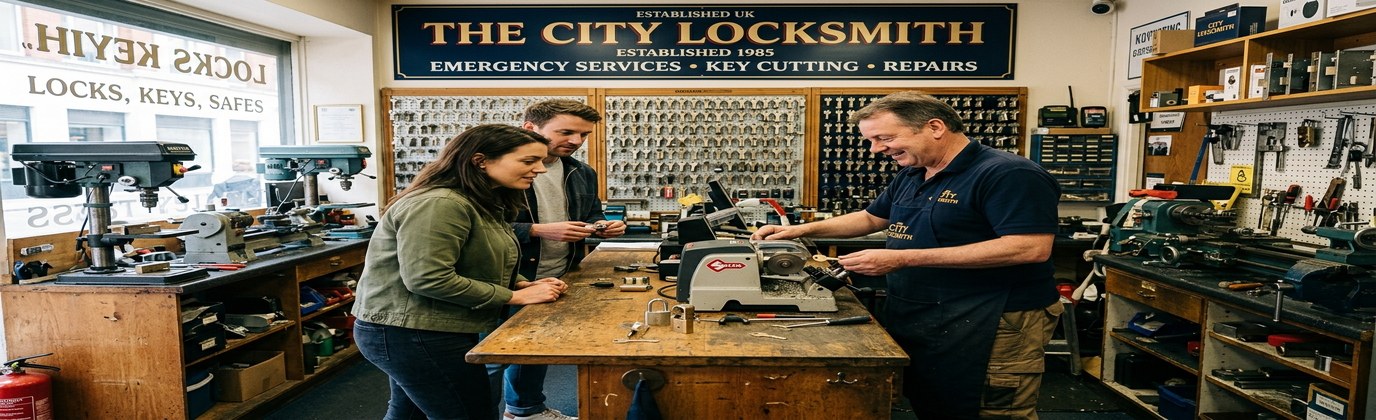
A genuine local locksmith can handle everything from a simple house lockout to advanced automotive key programming. This guide explains each service type, typical costs, and how to ensure you are hiring a qualified professional.
A local locksmith near you should be able to handle residential lockouts, rekeying, deadbolt installation, automotive key cutting and programming, and commercial access control. Before hiring, confirm a written estimate and check that they arrive in a branded vehicle with ID. Avoid any locksmith who refuses a written quote before starting work.
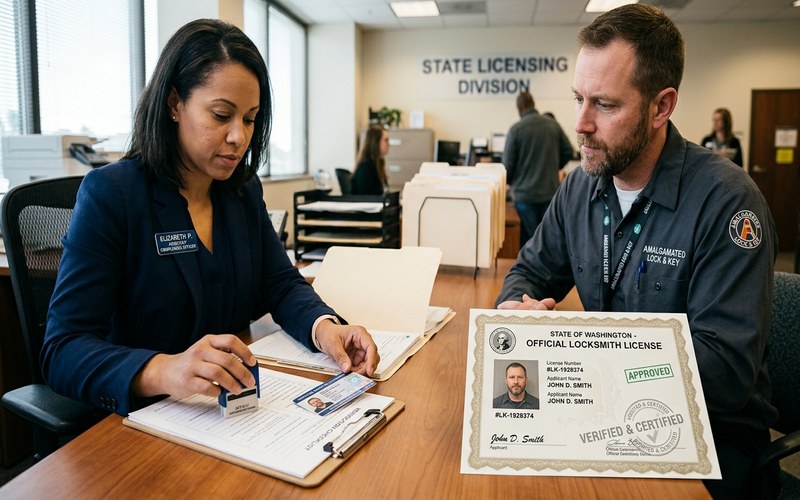
Residential locksmith services cover any lock-related need at a home or apartment: lockouts, rekeying when you move in, deadbolt upgrades, smart lock installation, and key duplication.
A residential lockout typically costs $75-$150 with a genuine local locksmith. Rekeying runs $65-$130 per lock. Smart lock installation by a professional (including hardware and labor) runs $150-$300 depending on brand and lock type.
What to look for: For residential work, confirm the locksmith holds a valid state license (in licensed states) and will provide proof of insurance on request. A licensed tech should not need to drill a lock except in rare high-security situations.

Commercial locksmith services cover offices, retail locations, warehouses, multifamily buildings, and government facilities. The work is more complex than residential and requires experience with access control, panic hardware, and master key systems.
Commercial services are typically priced on a per-project basis. A basic access control reader installation runs $200-$600 per door. Master key system setup for a small office building runs $500-$2,000+. Panic bar installation is $250-$500 per door including hardware.
What to look for: Commercial locksmiths should carry at minimum $1M in general liability insurance. For larger projects, request a Certificate of Insurance before work begins. In California, commercial locksmiths must hold a C-28 contractor license for some projects in addition to their BSIS locksmith license.
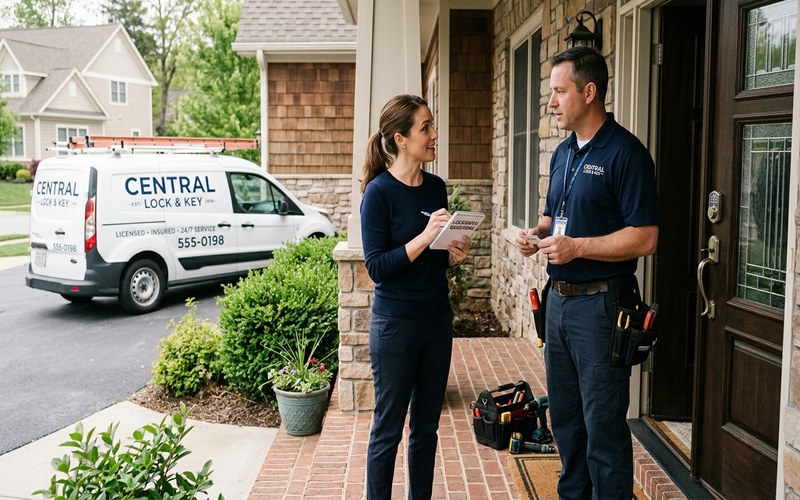
Automotive locksmiths handle car lockouts, replacement keys, transponder key programming, key fob repair, and ignition cylinder work. This is one of the most technically demanding specialties, particularly for modern vehicles with encrypted chip keys.
A car lockout runs $65-$120. A basic replacement key (for older vehicles without a chip) costs $50-$150. Transponder key programming ranges from $150 to $350 depending on vehicle make, model, and year. Smart keys or proximity fobs for luxury vehicles can run $300-$600+.
What to watch for: Car key prices vary widely by vehicle. Always get a quote specific to your year/make/model before any work begins. National call centers are particularly prevalent in this category, with frequent reports of $49 phone quotes turning into $500+ invoices on delivery.
Smart locks are now a standard residential upgrade. Here is what a local locksmith installs, what it costs, and what compatibility questions to ask before booking.
A good local locksmith checks your door thickness, existing prep holes, door handing, and deadbolt compatibility before recommending a smart lock model. Not all doors support all smart locks.
Expect $120-$250 for most smart lock installations including a mid-range lock (August, Schlage Encode, Kwikset Halo) and professional installation. Premium locks (Level, Yale Assure 2) with professional installation run $200-$400.
A professional installer pairs the lock to your Wi-Fi or Z-Wave hub, sets up access codes, and confirms the auto-lock and alarm features are working before leaving. DIY installation misses this step frequently.
Many smart locks are retrofit adapters that fit over your existing deadbolt cylinder. Others replace the entire deadbolt. Confirm which type you need before purchasing hardware, or let your locksmith supply and install together.
| State | License Required? | Issuing Agency | Agency Website |
|---|---|---|---|
| California | Yes | BSIS | bsis.ca.gov |
| Texas | Yes | TDLR | tdlr.texas.gov |
| Nevada | Yes | PILB | pilb.nv.gov |
| Virginia | Yes | DPOR | dpor.virginia.gov |
| New Jersey | Yes | DCA | njconsumeraffairs.gov |
| Alabama | Yes | ABOA | aboa.alabama.gov |
| Illinois | Yes | IDFPR | idfpr.illinois.gov |
| Maryland | Yes | MHIC | labor.maryland.gov |
| Oregon | Yes | CCB | oregon.gov/ccb |
| Tennessee | Yes | TDCI | tn.gov/commerce |
| Florida, New York, Arizona, Colorado, Ohio, Michigan | No state license | N/A | Check local BBB + city/county permits |
State licensing requirements change periodically. Always check the current status on the official state agency website.
When a locksmith works on your property, you want assurance that any damage or theft is covered. Here is what each type of coverage means and what to ask for:
General liability insurance covers property damage caused by the locksmith during service. A surety bond covers theft or intentional misconduct. Workers' compensation covers injuries to the locksmith on your property. A legitimate local locksmith will have all three, or at minimum the first two, and will provide a certificate of insurance without hesitation.
Send your question to our editorial team. We respond to service-specific questions within 24 hours.