Short answer: A locksmith works on the one thing standing between a stranger and everything you own, so "they showed up fast" is not the same as "they were trustworthy." This guide walks you through how to confirm a locksmith is properly licensed, insured, and legitimate before you ever let one near your door.
A locksmith works on the one thing standing between a stranger and everything you own, so "they showed up fast" is not the same as "they were trustworthy." This guide walks you through how to confirm a locksmith is properly licensed, insured, and legitimate before you ever let one near your door.
Locksmith licensing is not handled the same way across the country. A handful of states — including Texas, California, Illinois, Louisiana, and North Carolina, among others — require locksmiths to hold a state license, often with a background check attached, while many states have no statewide requirement at all and leave the rules to individual cities or counties. Before you assume a "licensed" badge on a website means anything, find out what your own state actually requires; a quick search for your state name plus "locksmith license" will tell you. Where licensing exists, ask for the license number and confirm it on the issuing agency's own website rather than trusting a photo of a card. Where no license is required, shift your attention to bonding and insurance instead — a legitimate shop carries general liability coverage, so that if a technician damages your door or hardware, you are not the one left absorbing the cost.
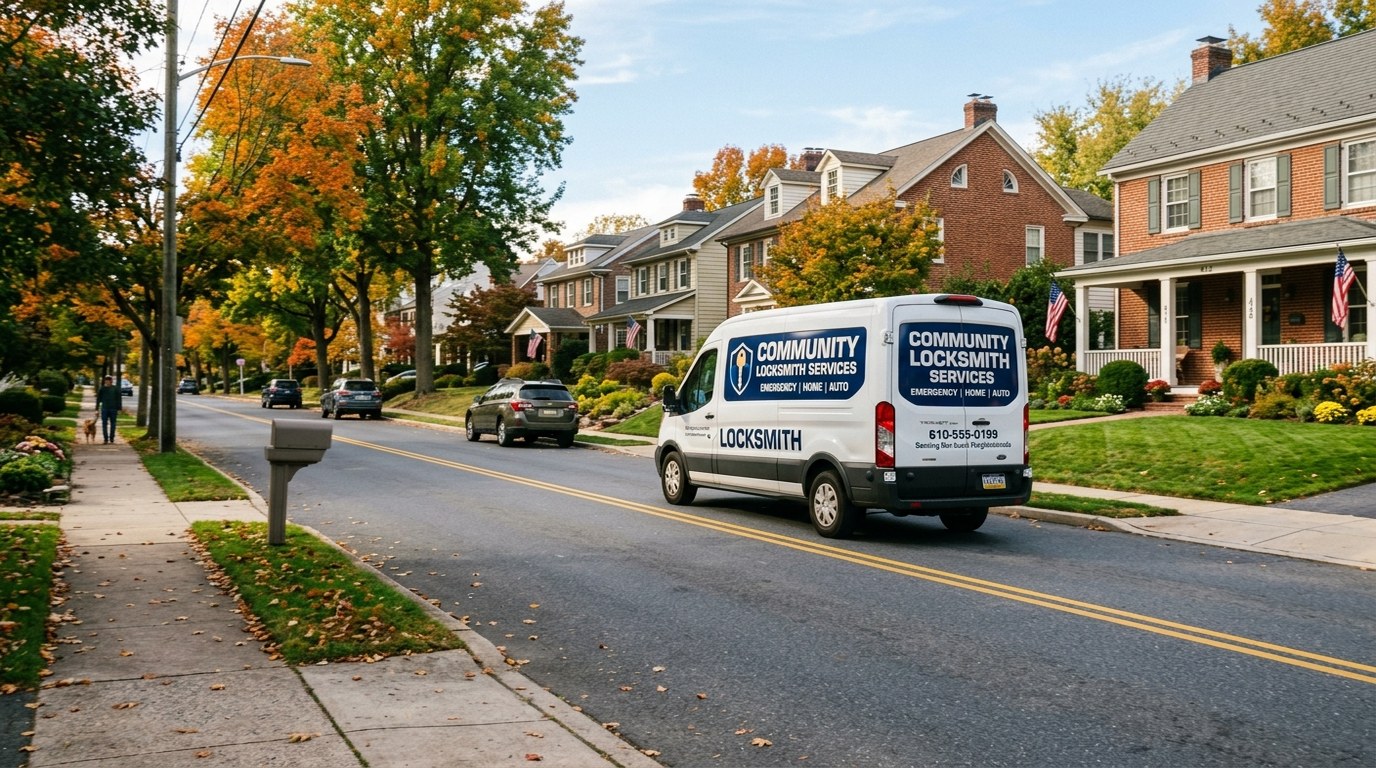
Most locksmith trouble is avoidable in the few minutes before anyone drives out. Start with the phone call: a real local business answers with its actual name, not a generic "locksmith services." Ask for a physical business address and check whether it maps to a genuine storefront or is just a placeholder in a cluster of near-identical listings. Get a total price range in writing or by text — including any service-call or trip fee — and ask specifically what would push the price up once they arrive. Confirm the company is insured, and ask whether the technician will show up in a marked vehicle and be able to present identification. Finally, be cautious of any company with no online footprint older than a few weeks, or one whose quote is dramatically lower than everyone else's; both are recurring patterns among fly-by-night operators.
When the locksmith arrives, a few small things separate a professional from a scam. A real technician will inspect your lock and confirm the price before starting work, not after. For a standard house lockout, a skilled locksmith almost always opens the door using picks or specialized tools rather than immediately drilling it out — if the very first move is to destroy your lock and sell you a replacement, that is a red flag rather than a necessity. Expect a written, itemized invoice showing the trip charge, labor, and any parts, with the business name and contact details printed on it. Legitimate shops accept cards; a demand for cash only, especially attached to an inflated on-the-spot total, is one of the most reliable warning signs there is.
Locksmith licensing is not handled the same way across the country. A handful of states — including Texas, California, Illinois, Louisiana, and North Carolina, among others — require locksmiths to hold a state license, often with a background check attached, while many states have no statewide requirement at all and leave the rules to individual cities or counties. Before you assume a "licensed" badge on a website means anything, find out what your own state actually requires; a quick search for your state name plus "locksmith license" will tell you. Where licensing exists, ask for the license number and confirm it on the issuing agency's own website rather than trusting a photo of a card. Where no license is required, shift your attention to bonding and insurance instead — a legitimate shop carries general liability coverage, so that if a technician damages your door or hardware, you are not the one left absorbing the cost.
Most locksmith trouble is avoidable in the few minutes before anyone drives out. Start with the phone call: a real local business answers with its actual name, not a generic "locksmith services." Ask for a physical business address and check whether it maps to a genuine storefront or is just a placeholder in a cluster of near-identical listings. Get a total price range in writing or by text — including any service-call or trip fee — and ask specifically what would push the price up once they arrive. Confirm the company is insured, and ask whether the technician will show up in a marked vehicle and be able to present identification. Finally, be cautious of any company with no online footprint older than a few weeks, or one whose quote is dramatically lower than everyone else's; both are recurring patterns among fly-by-night operators.
When the locksmith arrives, a few small things separate a professional from a scam. A real technician will inspect your lock and confirm the price before starting work, not after. For a standard house lockout, a skilled locksmith almost always opens the door using picks or specialized tools rather than immediately drilling it out — if the very first move is to destroy your lock and sell you a replacement, that is a red flag rather than a necessity. Expect a written, itemized invoice showing the trip charge, labor, and any parts, with the business name and contact details printed on it. Legitimate shops accept cards; a demand for cash only, especially attached to an inflated on-the-spot total, is one of the most reliable warning signs there is.
Send a request through the site with your location and what you need, and you will get a straight answer and an honest estimate before any work begins.
Request service — tell us what you need and we will reply with a straight answer and an honest estimate.